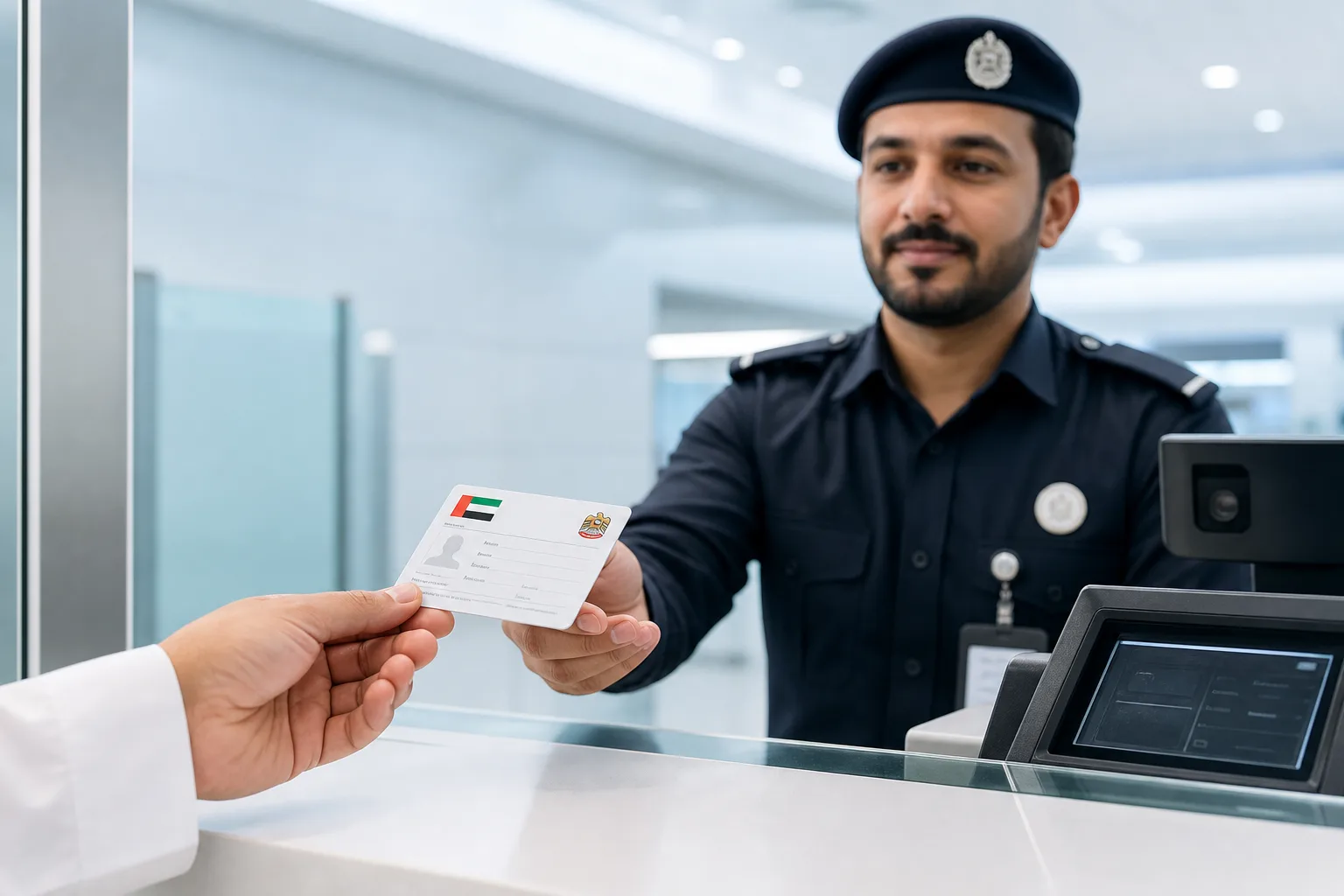

Foreigners can own 100% of a UAE company across most commercial and industrial activities following recent legal reforms. The three routes are free zone, mainland, and a financial centre such as DIFC or ADGM. Free zone entities carry a defined visa allocation based on licence type and workspace tier, and require no local sponsor.
Foreign investors seeking to set up company in UAE as a foreigner are entering a structured regulatory framework governed by federal and emirate-level authorities.
According to data published by the UAE Ministry of Economy and the Dubai Chamber of Commerce, the country hosts more than 1.4 million registered businesses, reflecting sustained commercial activity across sectors.
In 2026, the process to set up company in UAE as a foreigner is administered through defined digital systems covering licensing, activity approvals, tax registration, and immigration. This guide outlines the jurisdictional options and compliance considerations involved in foreign company registration UAE.
Key Jurisdictions for Foreign Company Registration UAE
When seeking to set up company in UAE as a foreigner, selecting the appropriate jurisdiction is a structural decision that affects licensing scope, tax exposure, office requirements, and visa allocation. For many foreign investors, free zones represent the primary incorporation route due to ownership flexibility and sector alignment.
Recent legal reforms permit 100% foreign ownership across most commercial and industrial activities, subject to approved activity lists and regulatory conditions.
Free Zones
Free zones are commonly selected by foreign investors operating in international trade, consultancy, logistics, e-commerce, and digital services. Each free zone operates under its own regulatory authority and licensing framework.
Key features include:
100% foreign ownership
Defined visa allocation based on license type
Flexi-desk or workspace options depending on activity
Access to 0% corporate tax on qualifying income, subject to Federal Tax Authority requirements
Free zone companies operate within their licensed activity scope and may conduct business internationally or with other free zone entities. Mainland commercial engagement is permitted subject to applicable structuring requirements.
Mainland
A mainland license, issued by the Department of Economy and Tourism (DET), allows companies to operate directly within the UAE domestic market under the approved activity classification.
100% foreign ownership is permitted for many commercial activities under current regulations. However, mainland structures typically require physical office space and are subject to federal corporate tax rules on taxable income above AED 375,000.
For foreign founders evaluating foreign company registration UAE, the choice between free zone and mainland should be aligned with intended market access, operational footprint, and long-term compliance strategy.
How to Set Up Company in UAE as a Foreigner: Five Core Steps
For foreign investors seeking to set up company in UAE as a foreigner, Dubai South Business Hub Free Zone provides a structured incorporation pathway within Dubai South's regulatory framework. While company formation steps are broadly consistent across UAE free zones, licensing at Dubai South is administered under the Dubai World Central (DWC) authority.
The core incorporation stages are outlined below.
Select Your Business Activity
Dubai South Business Hub Free Zone operates under an approved activity classification framework aligned with UAE regulations.
Selecting the correct business activity determines:
License category
Scope of permitted operations
Visa allocation parameters
Regulatory oversight obligations
The selected activity must accurately reflect the services or goods the company intends to provide or invoice for. Proper alignment at this stage reduces amendments later.
Choose the Appropriate Legal Structure
Across the UAE, foreign investors typically encounter the following legal structures:
Free Zone Establishment (FZE) - generally a single-shareholder entity
Free Zone Company (FZCO) - typically used where there are multiple shareholders
Limited Liability Company (LLC) - a separate legal entity structure recognised under UAE law
Within Dubai South Business Hub Free Zone, companies are incorporated under the Dubai World Central (DWC) Companies Regulations, and the standard vehicle is the:
DWC-LLC (Dubai World Central Limited Liability Company)
The DWC-LLC structure:
Permits 100% foreign ownership (subject to approved activities)
Limits shareholder liability to capital contribution
Operates as a distinct legal entity under the DWC authority
While the terminology FZE or FZCO may be used in other free zones, at Dubai South Business Hub Free Zone, incorporation is structured under the DWC-LLC framework.
In specific cases, branch structures of foreign or UAE entities may also be permitted, subject to authority approval.
Register Your Trade Name
The proposed company name must comply with UAE naming regulations and the Dubai South Business Hub Free Zone authority's standards.
The name must:
Be unique within the registry
Avoid restricted religious or governmental references
Align with the approved business activity
To reduce rejection risk, applicants may use the Dubai South Business Hub Free Zone Name Check tool to verify availability before submitting a formal reservation request.
Trade name reservation is required before final license issuance.
Obtain Initial Approval
Initial approval confirms that the authority has no objection to the proposed activity and corporate structure, subject to final documentation review.
At this stage:
Shareholder identification documents are submitted
Incorporation documents, including the Memorandum of Association, are prepared
Identity verification may be conducted in accordance with regulatory procedures
Approval remains conditional upon satisfying all authority requirements.
Secure Workspace and Issue the License
Dubai South Business Hub Free Zone requires companies to obtain an approved workspace within Dubai South.
Depending on operational needs, this may include:
Flexi-desk facility
Dedicated office space
Commercial premises (where activity requires)
Once incorporation documentation and workspace agreements are completed in accordance with DWC authority requirements, the trade license is issued.
Following license issuance, the company may commence operations within the scope of its approved activities.
Tax Landscape: What Foreigners Need To Know
The UAE Corporate Tax regime applies at a standard rate of 9% on taxable income exceeding AED 375,000, in accordance with Federal Decree-Law No. 47 of 2022 and related Cabinet Decisions.
Companies incorporated in free zones, including those at Dubai South Business Hub Free Zone, fall within the Corporate Tax framework and must assess their registration and filing obligations with the Federal Tax Authority (FTA).
Qualifying Free Zone Person (QFZP) Status
Free zone entities may be eligible for a 0% corporate tax rate on qualifying income, provided they meet the conditions set out under the Corporate Tax Law and applicable Cabinet Decisions.
To retain Qualifying Free Zone Person status, a company must generally:
Derive income that falls within the definition of "qualifying income"
Comply with regulatory and reporting requirements
Meet the conditions relating to operational presence within the free zone
Adhere to UAE transfer pricing rules where applicable
Income that does not meet qualifying criteria may be subject to the standard 9% corporate tax rate.
Application Within Dubai South Business Hub Free Zone
Companies established at the free zone are subject to the federal Corporate Tax framework.
Eligibility for the 0% rate depends on:
The nature of the licensed activity
The type of customers or counterparties
Compliance with statutory conditions
Ongoing regulatory adherence
Corporate tax treatment should be evaluated based on the company's specific operating model and revenue structure.
Why Foreigners Prefer Dubai South Business Hub Free Zone
For foreign investors seeking to set up company in UAE as a foreigner, location affects operational access, infrastructure proximity, and long-term scalability.
Dubai South Business Hub Free Zone operates within Dubai South, a master-planned economic district designed around aviation, logistics, and trade connectivity. The district is positioned near Al Maktoum International Airport, as well as major transport corridors linking air, sea, and land routes.
Businesses established here benefit from proximity to:
Al Maktoum International Airport
Jebel Ali Port
Major UAE highway networks
The Etihad Rail freight corridor
This positioning supports regional distribution, international trade, and multimodal transport efficiency.
Integrated Commercial Environment
Dubai South combines:
Commercial office zones
Logistics and aviation infrastructure
Residential communities
Education and retail facilities
For founders establishing long-term operations, this integrated district structure allows commercial and residential infrastructure to operate within the same planned environment.
Long-Term Infrastructure Planning
Dubai South forms part of the UAE's broader economic development strategy, particularly in aviation and logistics-led growth.
Companies incorporated at Dubai South Business Hub Free Zone operate within a district developed to support scalable commercial activity under a defined regulatory framework.
Comparing Costs: Mainland Vs. Free Zone
Company formation costs vary depending on business activity, visa allocation, and facility selection. The comparison below provides a general overview.
Component | Free Zone (Dubai South Business Hub Free Zone) | Mainland (Dubai) |
Starting Package | From AED 12,500 (including flexi-desk facility) | From AED 18,000+ (varies by activity and premises) |
Corporate Tax | 0% on qualifying income (subject to QFZP conditions); 9% on non-qualifying taxable income above AED 375,000 | 9% on taxable income above AED 375,000 |
Office Requirement | Flexi-desk or approved workspace required | Physical office space required |
Visa Allocation | Determined by license type and facility category | Linked to office size and activity approval |
Ownership | 100% foreign ownership (subject to approved activities) | 100% foreign ownership permitted for approved activities under federal regulation |
Incorporation Timeline | Subject to documentation and authority approval | Subject to documentation and authority approval |
Figures are indicative and subject to change based on authority updates and activity classification.
Conclusion
Setting up a company in the UAE as a foreigner requires selecting the appropriate jurisdiction, activity classification, and legal structure from the outset. Corporate tax, licensing scope, visa allocation, and workspace requirements must be assessed in alignment with the intended operating model.
Foreign company registration UAE is governed by defined federal and free zone regulations. Careful planning at the incorporation stage reduces amendments, delays, and compliance risk over time.
Dubai South Business Hub Free Zone operates within Dubai South, a master-planned district positioned around aviation and logistics infrastructure. For businesses seeking proximity to multimodal transport networks within a regulated free zone framework, it provides a structured environment to establish and operate.
Any jurisdictional decision should approach incorporation with clarity regarding regulatory obligations and long-term operational intent.